My Your His Her Sprawdzian Klasa 4

Hey everyone! Let's talk about something that might seem simple, but it's super important in English: possessive pronouns and adjectives. We will be looking at *my*, *your*, *his*, and *her*. Think of them as little words that show ownership.
What are Possessive Adjectives?
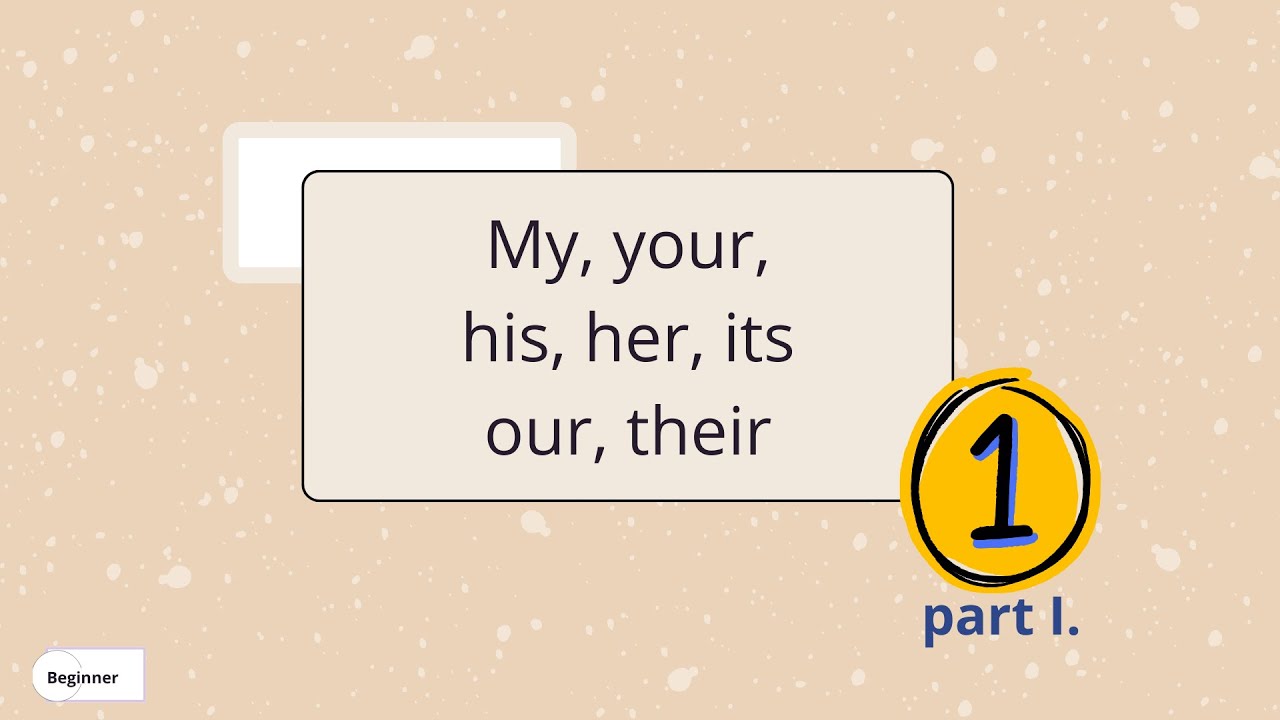
First off, let's clarify what a possessive adjective is. A possessive adjective sits before a noun. It tells us who or what owns that noun. They are *my*, *your*, *his*, *her*, *its*, *our*, and *their*. Today, we'll focus on *my*, *your*, *his*, and *her*.
The key thing to remember is that possessive adjectives describe nouns. They don't replace them. For example, instead of saying "This is book," you say "This is *my* book". The adjective *my* specifies whose book it is.
My: Showing What Belongs to Me
*My* is used when something belongs to me. It signifies personal ownership. Think about it: if you are holding a pen, you might say "This is *my* pen."
Another example: "This is *my* house." The house belongs to me, so I use *my*. If you have a favorite song, you can say "This is *my* favorite song". See how *my* clearly defines ownership.
Your: Showing What Belongs to You
*Your* is used when something belongs to the person you are talking to, or you. It shows ownership directed at the listener. If you are talking to a friend, you could say, "Is this *your* bag?"
Another instance: "What is *your* name?". I'm asking *you* about *your* name. Let's say you see a cool car. You might ask, "Is that *your* car?". Using *your* is a polite and direct way to inquire about possession.
His: Showing What Belongs to Him
*His* is used when something belongs to a male. It's that simple. Think of a boy named Tomek. "That is *his* bike." The bike belongs to Tomek, a male.
More examples: "This is *his* project". The project belongs to him. Or, “*His* dog is very friendly”. We are specifying that the dog belongs to a male individual.
Her: Showing What Belongs to Her
*Her* is used when something belongs to a female. It is the female equivalent of *his*. If a girl named Ania owns a doll, you would say, "This is *her* doll".
Consider this: "That is *her* idea." The idea belongs to a female. Another example: "We are meeting *her* parents tomorrow." Here, we are indicating the parents of a female person.
Why Are These Important?
Understanding these possessive adjectives is crucial for clear communication. Using them correctly helps avoid confusion. Imagine saying "This is bag" instead of "This is *my* bag". It wouldn't make much sense, would it? Correct usage makes your English sound more natural and precise.
So, remember *my* (belongs to me), *your* (belongs to you), *his* (belongs to a male), and *her* (belongs to a female). With a little practice, using them will become second nature!